Business Operations – Automated
The monotonous work handled, so you and your team can get on with what you do best. Built for B2B hospitality wholesalers by someone who spent three years managing one.
Work
All work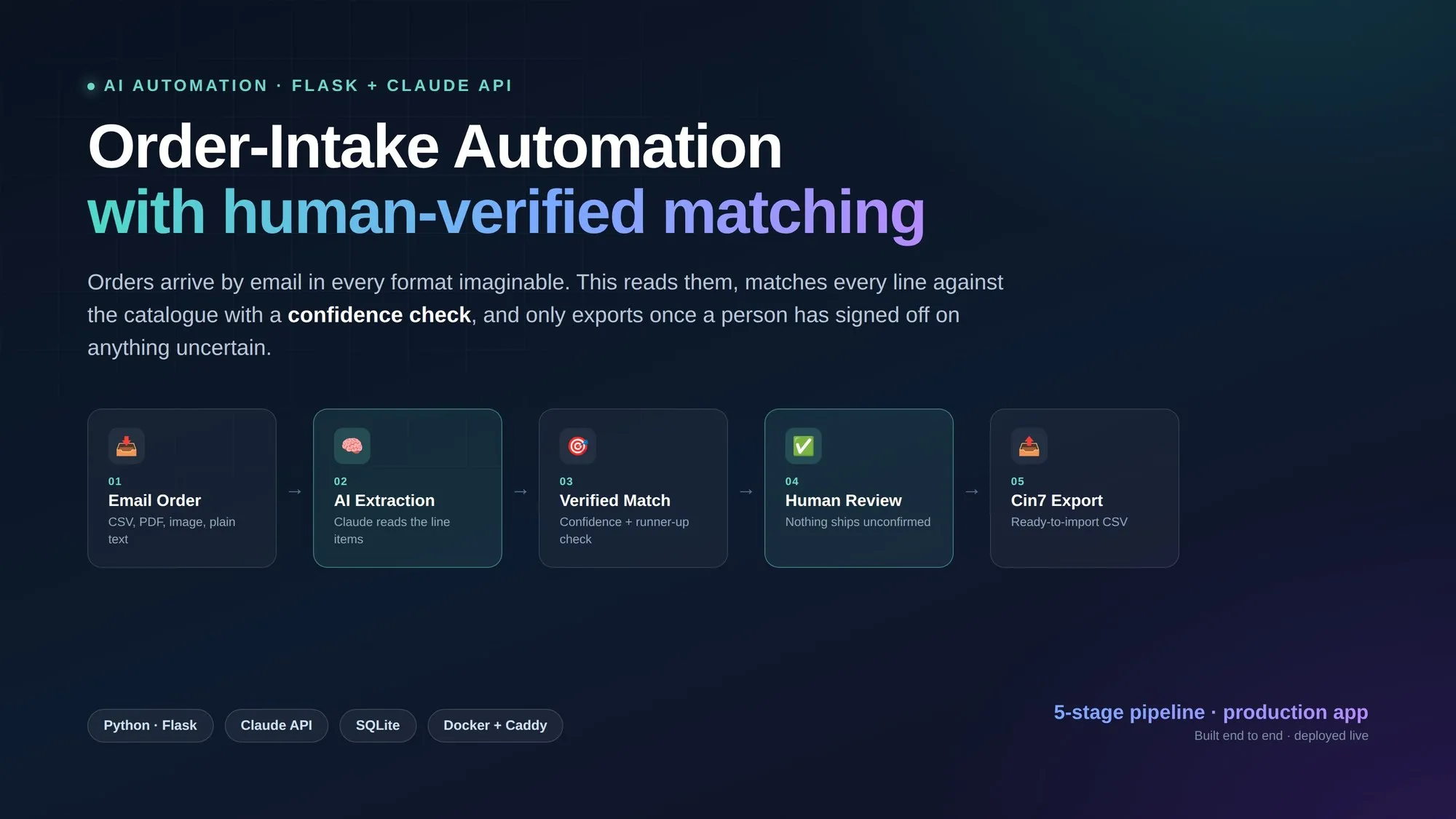
The same shape every time
Order entry, procedures, monitoring: the build changes, the shape doesn't. The machine never gets the last word.
-
Something arrives
An order email, a form, a feed
-
The machine reads it
Pulls out the lines that matter
-
It proposes an answer
With a score, not a guess
High confidence → straight through
Uncertain → you check it
-
You decide
One click, on the uncertain ones
-
It's committed
Into the system you already run
Dashed while it's still a proposal. Solid once you've confirmed.
Confident answers go straight through. Uncertain ones wait for you.
Three years at Rox Hospitality
Before I built automations, I ran operations at Rox Hospitality, a wholesaler on the New South Wales south coast. It's the part of the CV that matters most for this work, so it gets the space. Open any line for the longer version.
Started on the truck and in the pick line. Finished running the operation.
Rox Hospitality is a hospitality essential provider, 50–100 orders a week, thousands of SKUs, deliveries from Helensburgh to Mollymook. I started on packing & delivering. Toward the end I was managing the drivers and planning the runs, still jumping in behind the wheel on busy days, with the systems work built alongside.
Gave the business live stock tracking for the first time.
Before Cin7, there was no inventory system. I prepared the rollout single-handed: thousands of SKUs' worth of product data, codes and pricing. The result was live stock tracking and inventory valuation for a business that had never had either.
Planned the split into a second warehouse, and the picking system that made it work.
A converted mechanic's garage on the same site, shared with Alasco Engineering. I planned the split, helped clear and fit it out, and built a picking system that kept orders moving across two separate buildings. The move was also a chance to clear dead stock and tidy up old product codes in Cin7.
Reinvented how the warehouse ran day to day, in dozens of procedures that still hold.
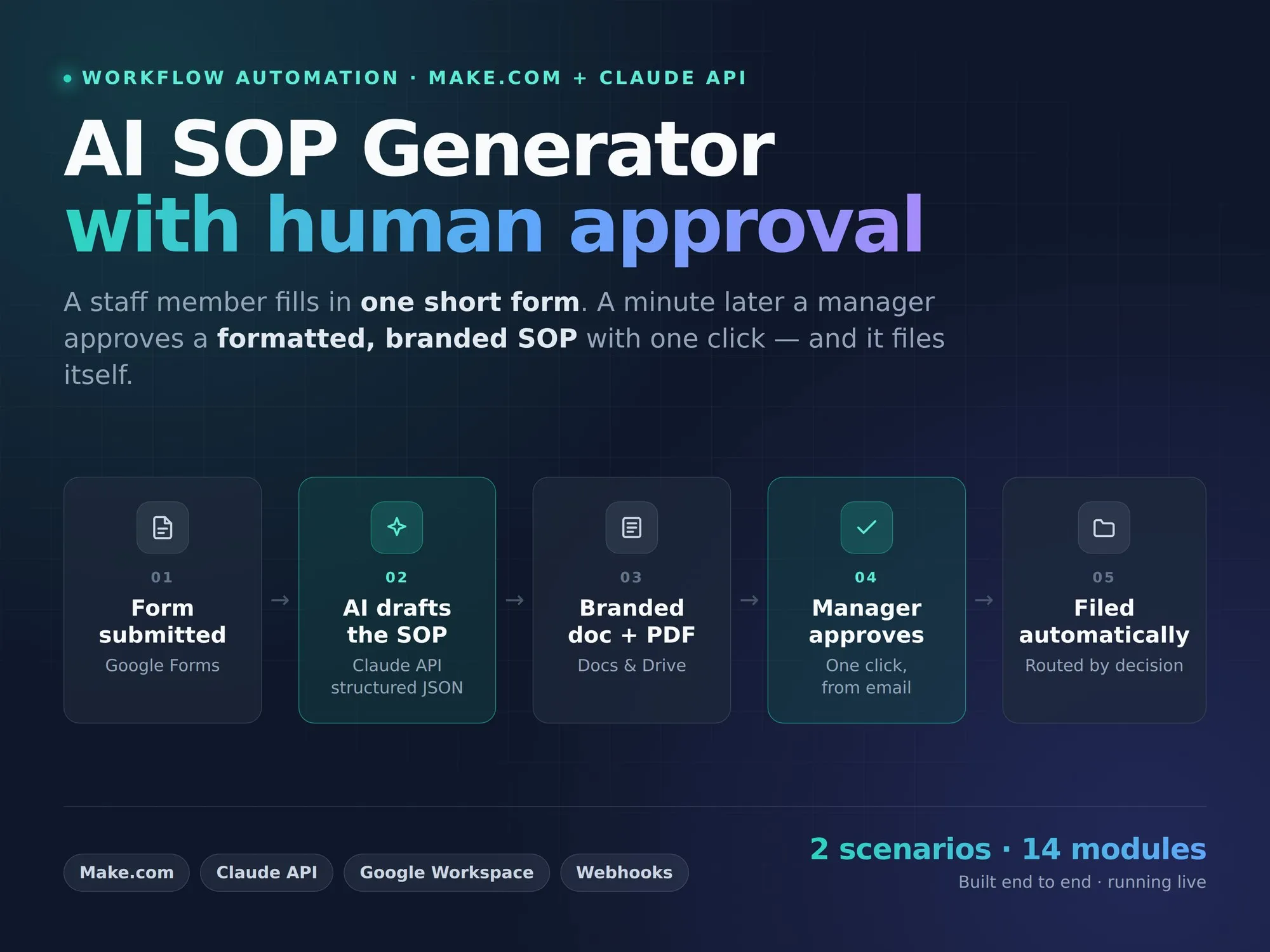
From planning trip sheets, to order preparation & warehouse management. I wrote the procedures that Rox still run on today. A big inspiration for the SOP generator I've built: I've written enough by hand to know what the shortcut has to get right.
Co-managed the warehouse with the owner, because at that size everyone does.
A business that size has no dedicated operations team. Everyone pitches in, and I ran the warehouse jointly with the sales manager, who's also the owner. Over three years the business grew, and error rates and stock accuracy improved substantially.
Built the order-intake tool for Rox Hospitality, to get order entry out of one person's head.
Orders arrived messy, at all hours, for next-day delivery, and every customer had their own shorthand. Only the sales manager could decode them. The order-intake tool stood to change that: its alias database translates each customer's jargon, so anyone can enter an order and the knowledge no longer sits with one person.
How a build runs
Four steps, in order, from the first walk through the warehouse to the day it quietly keeps working. Written from the business side of the desk, because that's the side I came from.
-
Scoping
We start in the warehouse, not in a spreadsheet. I walk the process with the people who do it: where orders land, what gets re-keyed, what breaks on a busy Friday. Because I have run this side of a business, we skip most of the explaining.
-
Automation report
You get a short written report: what is worth automating, what is not, what the build will do on an ordinary Tuesday, and what it needs from you. Plain English, in the order you would read it, with nothing hidden in the appendix.
-
Build and implementation
Built on the tools you already have wherever possible. It runs beside the current process first, on real orders, until your team trusts it. Then it takes over, with documentation your staff can actually follow.
-
Upkeep and maintenance
Suppliers change their formats, staff come and go, systems update. I keep what we built working and adjust it as the business changes, so it never quietly stops being used.